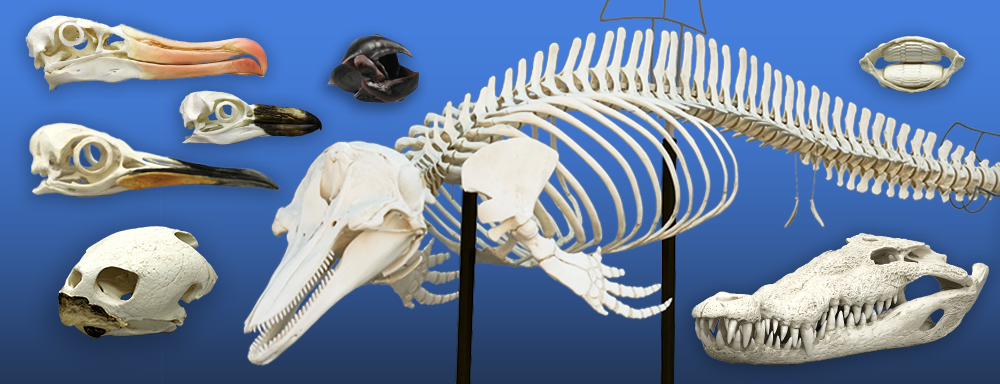
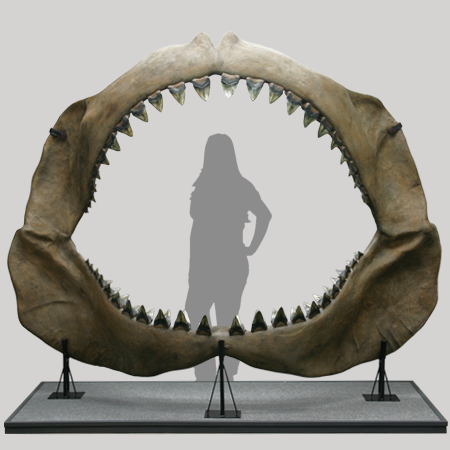
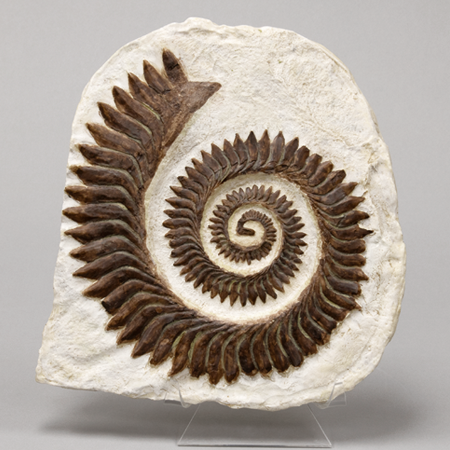
Aquatic and marine animals live in or near water and include birds, mammals, turtles, fish, sharks, and rays. Aquatic animals are adapted to life in and around water. Many aquatic adaptations take similar form: fusiform, or torpedo-like, bodies, flippers to assist in propulsion, the reduction or loss of hind limbs and pelvis, and a non-bony tail. An examination of the skeletal form gives insight into an animal’s survival strategy. Bone Clones® skeletons and skulls can give visitors and students a visceral experience of animals' structural framework, as they are durable and withstand handling. Bone Clones® can illustrate similarities and highlight differences in osteological form. Dolphin and manatee skeletons displayed together demonstrate similarity in body shape. Seal and dolphin forelimbs, side-by-side, illustrate convergent evolution. The addition of a human forelimb illustrates divergent evolution. Aquatic bird skulls illustrate a variety of differing strategies employed by aquatic bird species. |