



 ALSO SEE:
- Display Stand
- Additional Accessories
- Fossil Hominid Skulls
- Fossil Hominid Skeletons
- Modern Ape Skulls
 button in the upper-right to email it.
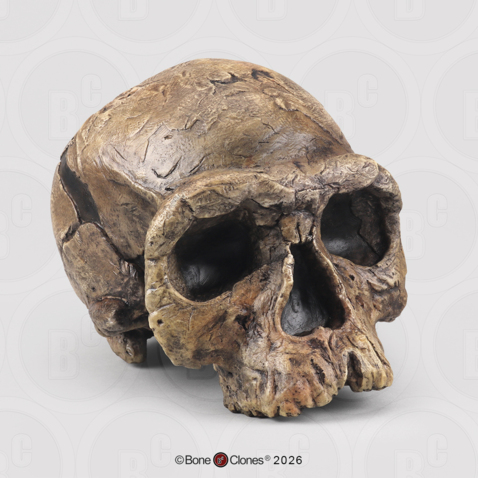
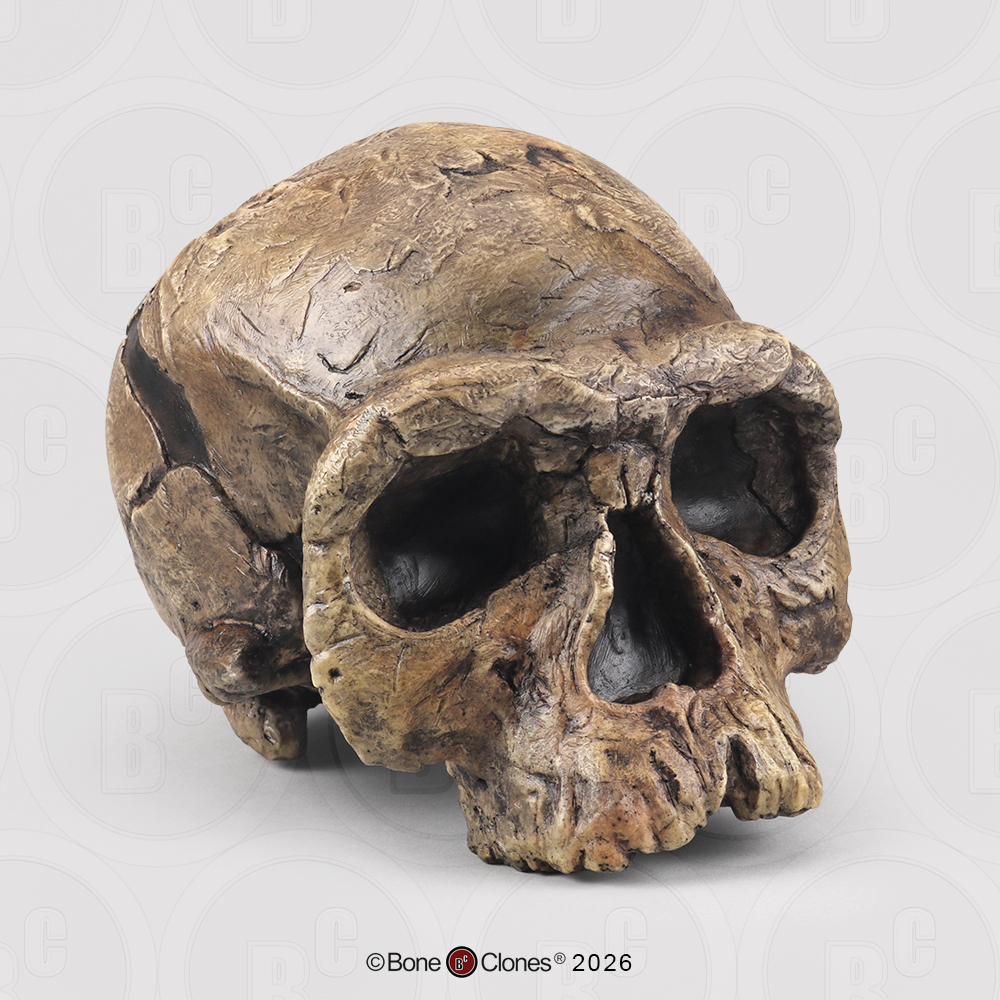
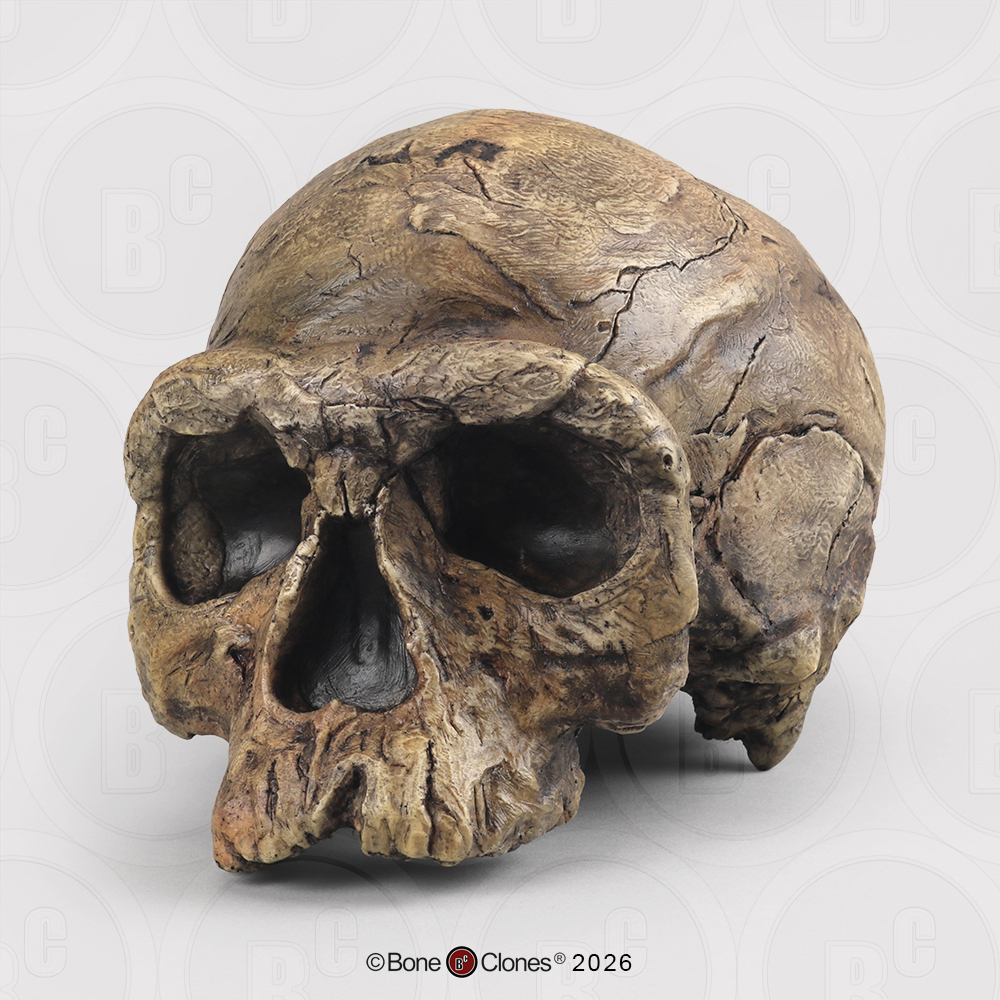
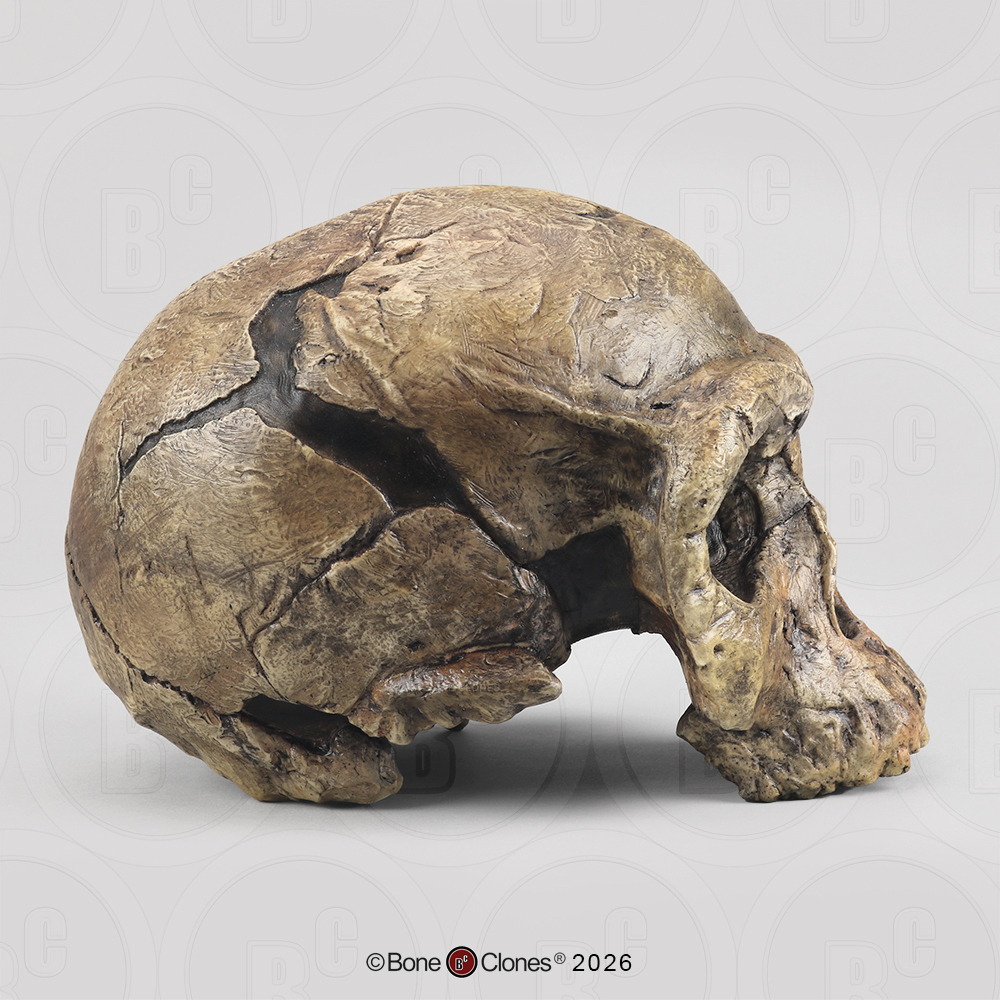
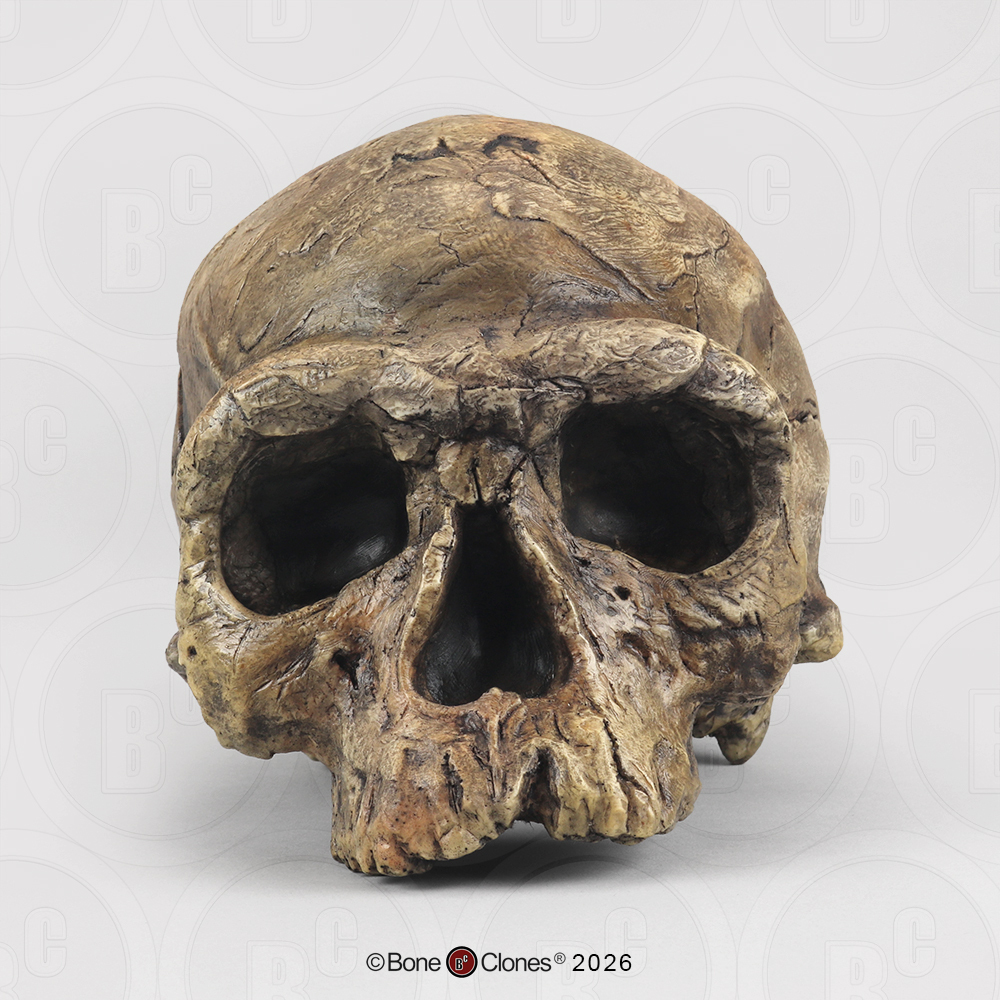
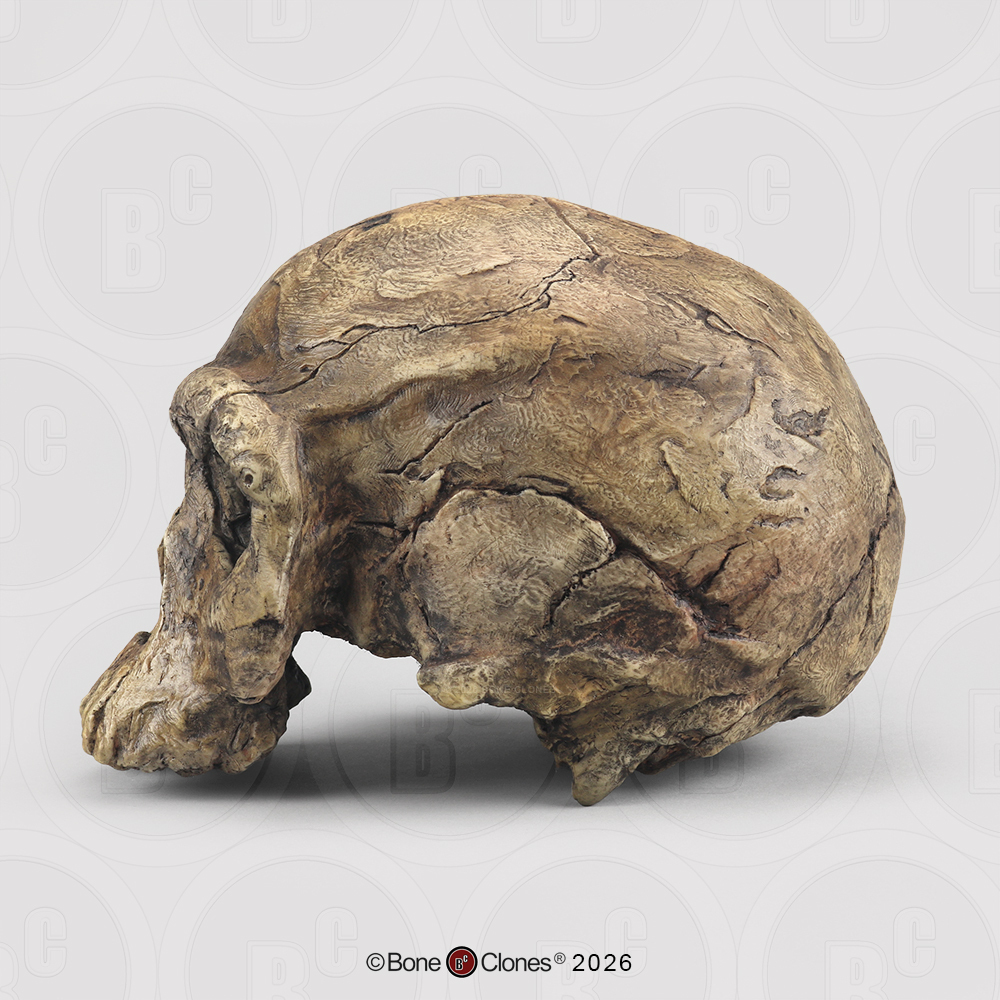
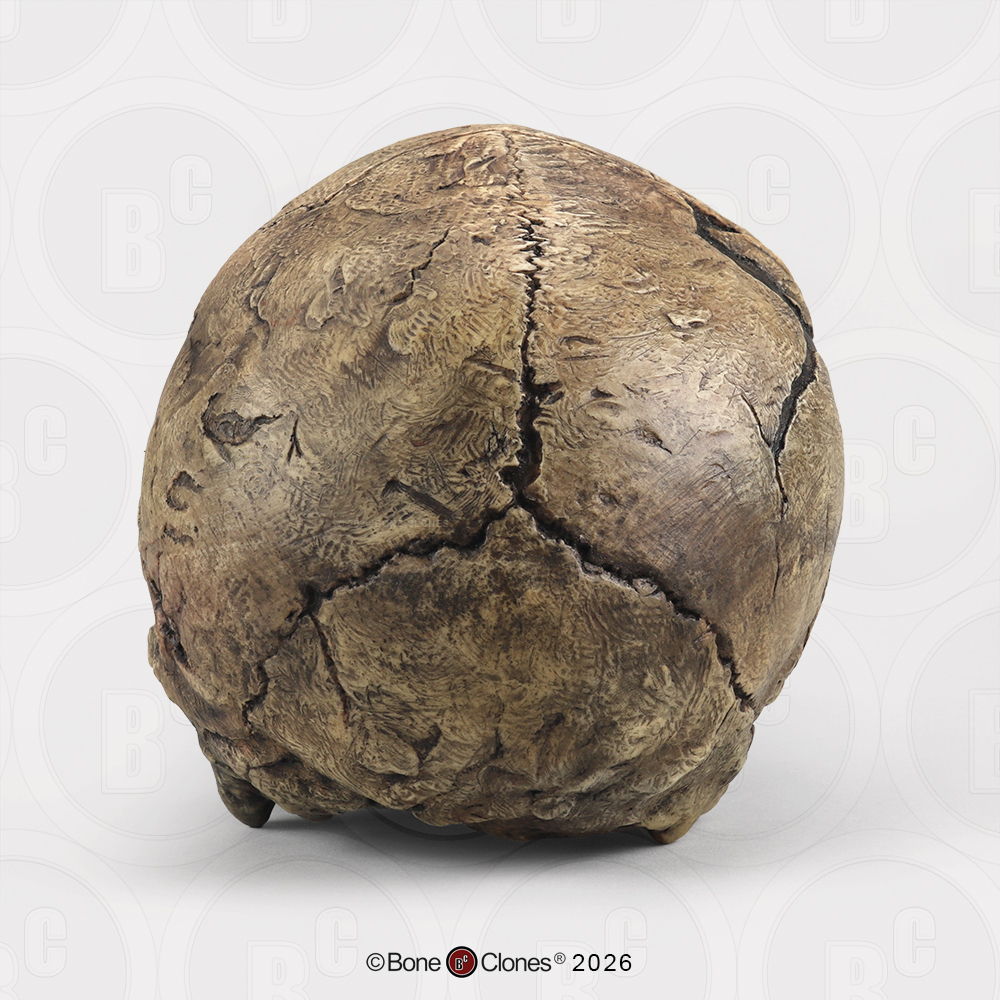
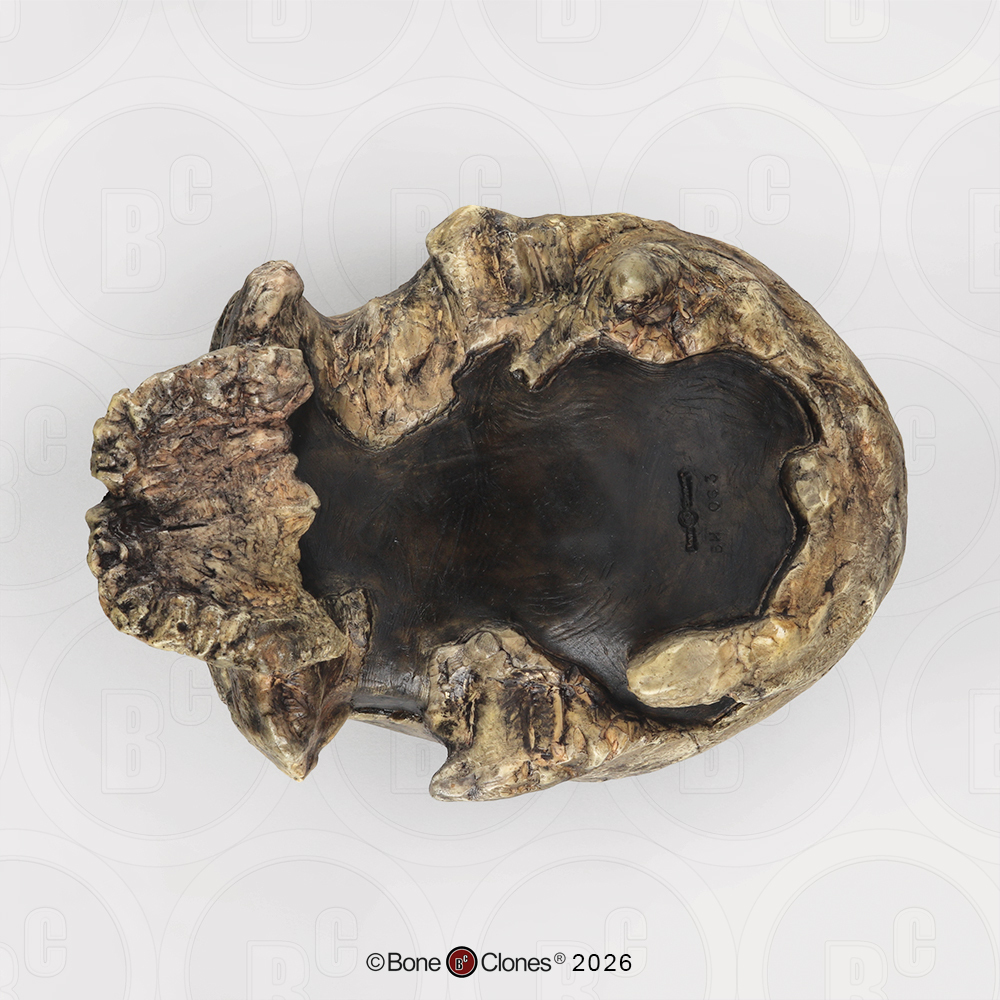
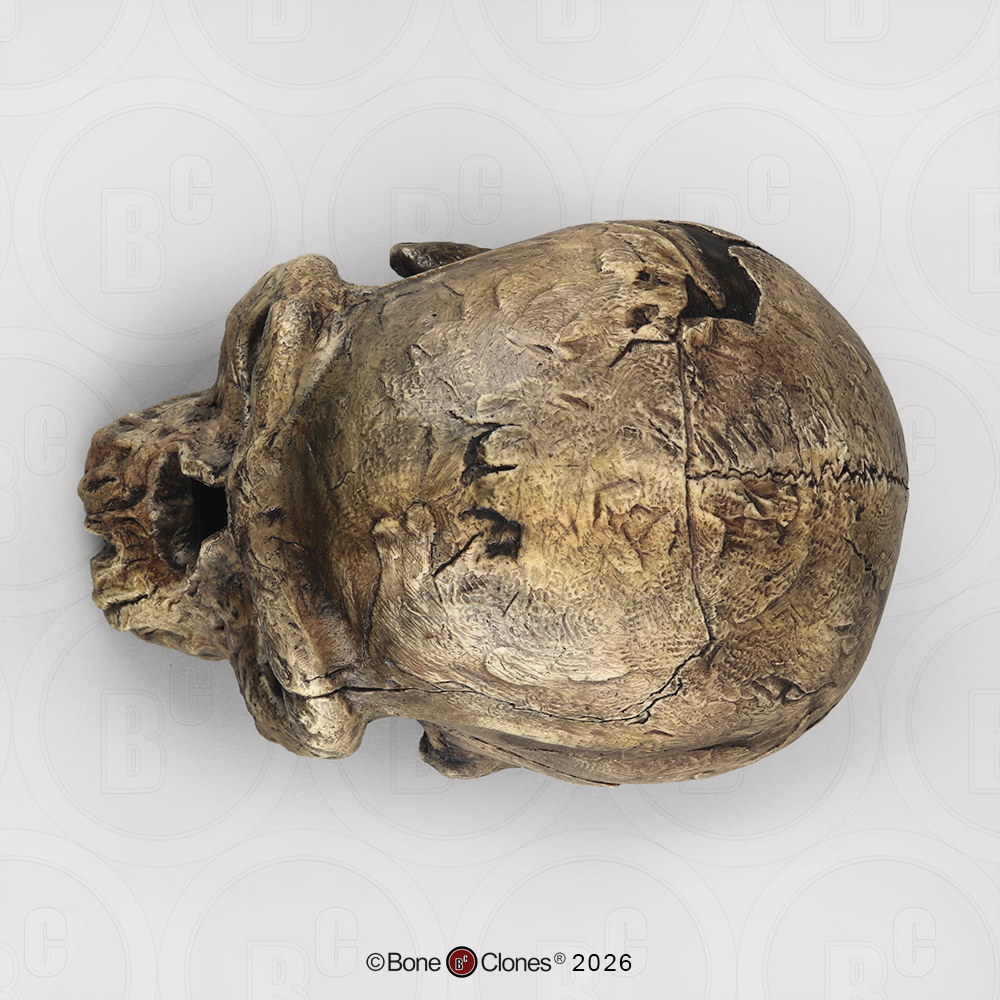
Homo sapiens Jebel Irhoud 1 Cranium
BH-063 $275.00
In 1961, miners working at Jebel Irhoud in Morocco discovered a fossil cranium that would eventually challenge our understanding of human evolution. Initial analyses suggested that the fossil might represent a surviving archaic human species, possibly Homo heidelbergensis, which is thought to have been the ancestors of both Neanderthals and modern humans. However, subsequent excavations in the early 2000s, combined with renewed analysis of the fossils and improved radiometric dating techniques, revealed that the Jebel Irhoud remains could fundamentally reshape our understanding of the origins and evolution of Homo sapiens in Africa.
Dating to more than 300,000 years ago, the Jebel Irhoud fossils represent some of the oldest known evidence of Homo sapiens. Irhoud 1, in particular, displays a fascinating combination of modern and archaic anatomical features. Its face is relatively short and small, resembling that of modern humans, while its prominent brow ridges retain a more archaic appearance. In contrast, the braincase is large and elongated, differing from the more rounded skull characteristic of modern Homo sapiens. This combination of traits suggests that aspects of modern human facial anatomy evolved before the development of the globular brain shape seen in humans today. Changes in brain shape occurred later in the Homo sapiens lineage and may reflect adaptations that emerged over thousands of years of evolutionary change.
The significance of the Jebel Irhoud discoveries extends beyond the age of the fossils themselves. For many years, scientists believed that Homo sapiens originated in East Africa approximately 200,000 years ago. However, discoveries at Jebel Irhoud, alongside other important African fossil finds, including the Florisbad cranium in South Africa and the Omo fossil remains in East Africa, challenge the idea of a single, geographically restricted origin for our species. Instead, these discoveries suggest a much more complex picture of human evolution, involving populations spread across different regions of Africa. No single population may have initially possessed the complete combination of anatomical features that characterize modern humans. Rather, modern human characteristics emerged gradually across Africa, highlighting the complex and interconnected evolutionary history of our species.
A custom metal display stand is available below.
The Bone Clones® Fossil Hominid line is composed of discoveries from anatomically modern humans, archaic humans, early Homo, early hominins, and other hominids. The majority of the casts in this line have been recreated by our team of anatomical sculptors. Some are reconstructions made by anthropology professionals using fragmentary elements from original discoveries and extrapolating the missing parts from those (i.e. Neanderthal skeleton).
| Scientific Name | Catalogue # | Size | Price |
| Homo sapiens | BH-063 | 8 ½" L x 6" W x 6" H 21.8L x 15W x 15H (cm) | $275.00 |
Related Products:
-
 Homo naledi Skull LES1
-
 Australopithecus anamensis Cranium
-
 Denisovan Xiahe Mandible
-
 Homo sapiens idaltu BOU-VP-16/1 Herto Cranium
-
 H. sapiens Oase Skull With Reconstruction
-
 Homo heidelbergensis Mandible Mauer 1
-
 Homo sapiens Skull Skhul 5
-
 Homo neanderthalensis Skull La Ferrassie 1
-
 Homo heidelbergensis Cranium Broken Hill 1 (Rhodesian Man)
-
 Homo habilis Cranium OH 24
-
 Homo neanderthalensis Skull Teshik-Tash Child
-
 Homo rudolfensis Cranium KNM-ER 1470
-
 Homo heidelbergensis "Bodo" Cranium
-
 Homo ergaster Cranium KNM-ER 3733
-
 Homo erectus Cranium Sangiran 17
Newsletter Signup


9200 Eton Ave.
Chatsworth, CA 91311 USA
© 1992-2026 Bone Clones Holdings. All Rights Reserved.